Climate-smart farming
Drought-tolerant crops, mulching, drip lines, better yields on the same land.
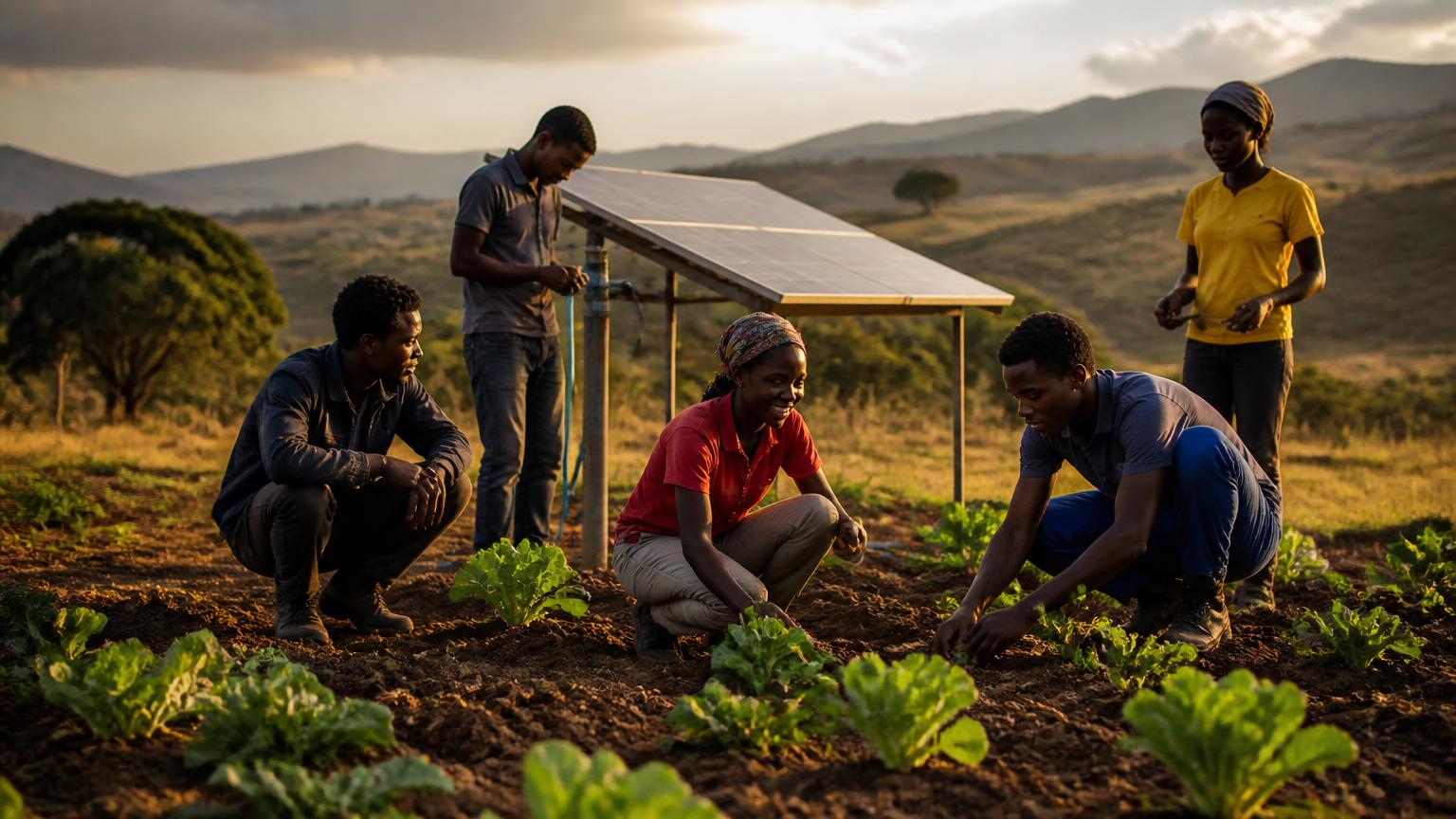
Inspired by Gcabho · Eswatini
Look around your community. There's waste with nowhere to go, fields drying out, water being lost, and the power out again. Each of those problems is also work someone could be paid to do. We help young people in Eswatini, South Africa and across Southern Africa turn one of them into work that pays. You don't need a CV, money, or anyone's permission to begin.
A short quiz on what's held you back, the local problem that bothers you most, and what you already have access to. Then we point you to the green role or business that fits.
Branching scenarios: rejection, first customer, first funder. See how it could unfold.
Green funds, climate fellowships and training open to young people in your country.
By the end you'll have real skills in your chosen lane, a registered venture or a job-ready project, and a path to funding or employment. The quiz is only the start.
Our story
A platform for NEET Sub-Saharan African youth to start. You don't have to invent a brand-new life. You add one small capability to the path you already have access to.
For generations, farming or farm labour was the default fallback, the thing you could always do if nothing else worked out. Climate volatility and a faster-moving economy have eroded that safety net: land alone doesn't reliably provide a livelihood the way it used to.
The answer isn't to abandon farming, though. Smallholder farmers who add a few simple tools and timely information, like weather patterns, market prices or basic efficiency habits, can earn more than those who rely on the old way alone. You don't need a completely new path. You need one new capability on the path you already have.
That's where this started. Today the same idea applies to energy, water and waste too. Pick the lane that matches the problem you already see.
Started at 15
A garden that became a Rise project.
When I was in high school I ran a garden that grew produce organically, and I sold that produce to my community at 15–17 years old. It became my Rise project. That one small step of selling what I could grow taught me that a livelihood doesn't start with permission. It starts with something you can already do, plus one new tool.
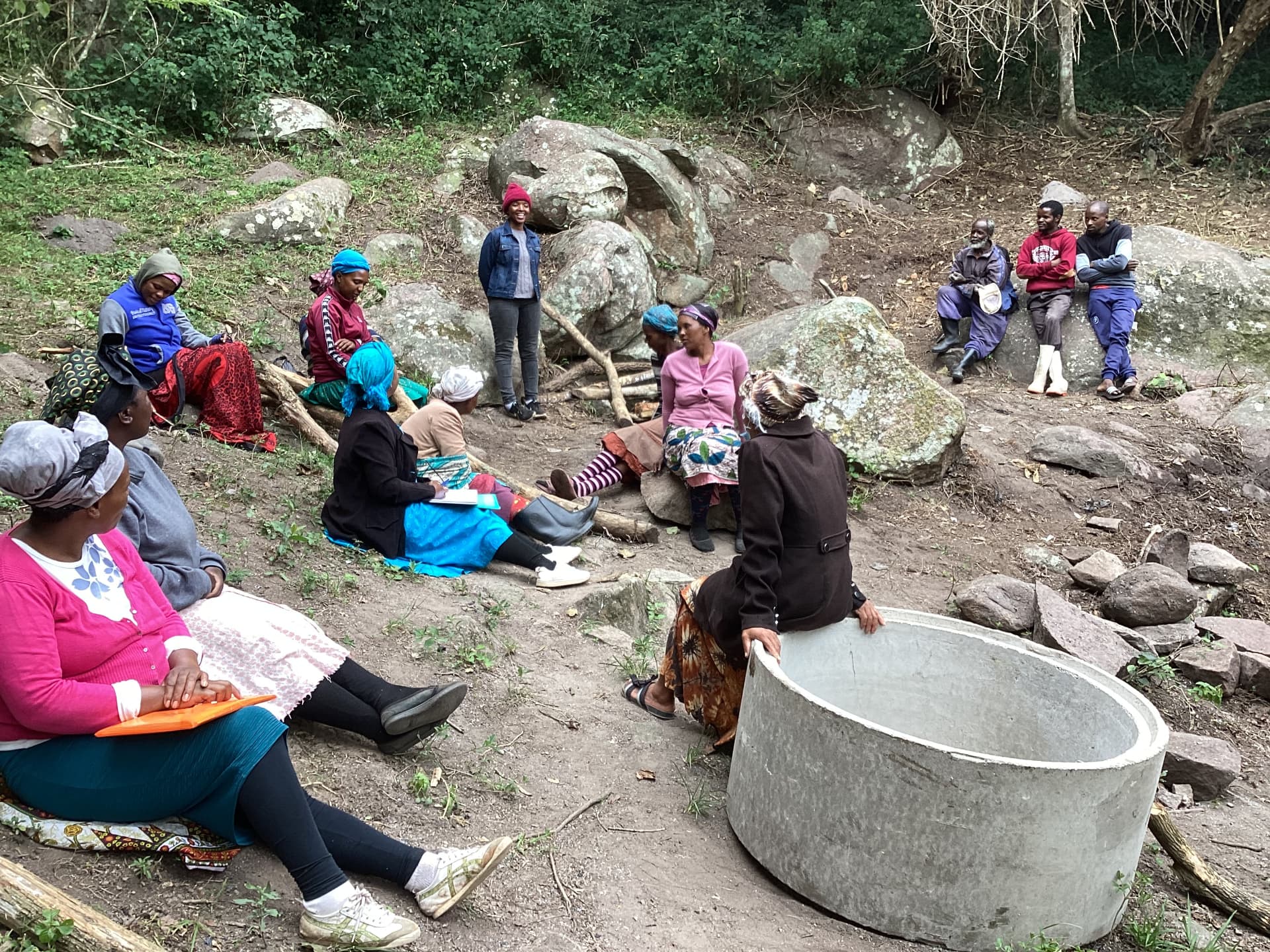
In the field
Before this platform, I volunteered with climate focused organisations here in Eswatini. Days like this one, sitting with a community around the water work they actually need, are why the advice on this site stays practical. I've seen what people are working with.
Why this matters now
Today most people in Eswatini have fewer ways to make money beyond the farm while still living sustainably. This platform starts from that reality. If the old fallback is shaky, the way forward is to upgrade it, not to romanticise it. Farming, informal trade, or whatever you already have access to can each become a real livelihood once you add the right small capability.
Start your profileTell us your qualification, access, and starting point, including farming or informal trade, so we can tailor your next steps.
Every one of these starts as a problem in your own community: a dumpsite, a dry field, a power cut, a river running brown. Each one is also a way to earn. Pick the problem closest to you and we show you the first paid step in it.
Drought-tolerant crops, mulching, drip lines, better yields on the same land.
Rainwater harvesting, tank installs, leak repair, borehole and greywater work.
Solar installs and repair, batteries, cookstoves, phone-charging kiosks.
Collection rounds, sorting, buy-back centres, plastic and tyre reuse.
Second-hand repair, upcycled fashion, offcut products, local resale.
Tree nurseries, planting contracts, rangeland and river restoration.
Drying, canning, milling, cold storage. Stop the harvest from rotting.
Compost, cover crops, livestock rotation, soil that holds water.
Beekeeping, eco-tourism guiding, community conservancy work.
No qualification, no capital, no connections. One local problem is enough to begin.
Our approach
We start with the green problem you can already see where you live, whether that's energy gaps, water loss or waste piling up. Then we match you to a lane, train you in weekly sessions led by practitioners, and connect you with local organisations where you can try the work for real.
3 lanes
Renewable energy, water, and waste to start
1 session / week
For 3 months, fully virtual
10–20
Young people per cohort
One short intake, then three steps. Every result is tailored to your qualification, access, and starting point, including farming or informal trade.
Step 0 · Start here
Country, qualification, access, and starting point. Takes under 60 seconds.
Everyone answers the same 4 questions. No CVs, no favorites, no insiders.
BeginRead more
You don't need money to start. Once you've built something real, we help you find funders who back proof, not paperwork.
ResourcesSolar, water, waste, conservation and farming employers are hiring in the region. Seven questions to find which of them fits you and where those jobs are posted.
Explore the Employability TrackConsistency beats intensity. Check in each day, log small wins, and earn XP and badges along the way. A bit like Duolingo, but for your future.
Start your streakStart with the one you can already see. Use what you have, fix it small, get paid, and then do it again next week.
Start the quiz